Introduction
Importance of Classic Car Storage Care
When it comes to classic car storage care, understanding the importance of proper storage is essential. Classic cars are not just vehicles; they are valuable investments, cherished for their history, beauty, and uniqueness. However, improper storage can lead to deterioration, affecting both the exterior and interior of the car. Without the right storage conditions, classic cars can suffer from rust, paint damage, and mechanical issues, leading to costly repairs and a loss of value.
Proper storage ensures that your vintage vehicle remains in top condition, preserving its original features and protecting it from environmental hazards. By taking the time to store your classic car correctly, you can prevent common issues such as rust, corrosion, and interior fading. This is especially important for long-term storage, where the car may remain unused for extended periods. There are many resources available in internet (specially Youtube), which you can go there and watch them.
Overview of Key Considerations
When thinking about classic car storage care, several key considerations must be addressed to ensure the vehicle’s longevity. First and foremost is the storage environment. A climate-controlled garage is ideal for vintage vehicle storage, as it protects the car from extreme temperatures and humidity, which can lead to rust and damage to the car’s interior.
Another crucial aspect is preparing the car for storage. This involves thorough cleaning, both inside and out, to remove dirt and contaminants that can cause damage over time. The fuel system should be stabilized, and fluids should be topped up to prevent engine corrosion. Protecting the tires and battery is also essential to avoid flat spots and loss of charge during storage.
Additionally, antique car preservation requires attention to detail, especially when dealing with rare or delicate materials. Ensuring that the paint and upholstery are properly protected can prevent fading and deterioration. Long-term storage for classic cars also involves regular inspections to monitor the car’s condition and make necessary adjustments.
Choosing the Right Storage Environment
Climate-Controlled vs. Standard Storage
When it comes to classic car storage care, selecting the right storage environment is crucial for preserving the condition of your vintage vehicle. Climate-controlled storage provides a stable environment by maintaining consistent temperature and humidity levels. This is especially important for antique car preservation as fluctuations can cause damage to the vehicle’s interior and exterior.
Standard storage environments, on the other hand, may not offer the same level of protection. They are often more susceptible to temperature and humidity changes, which can lead to issues like rust and deterioration. For long-term storage for classic cars, climate control is highly recommended to ensure your classic car storage care is thorough and effective.
Indoor vs. Outdoor Storage Options
Deciding between indoor and outdoor storage options is another key factor in storing classic cars. Indoor storage provides the best protection from environmental elements such as rain, snow, and UV rays. It also shields your vehicle from potential vandalism and theft, making it a preferred choice for many classic car owners.
Outdoor storage, while often more accessible and cost-effective, exposes your classic car to the elements. If outdoor storage is your only option, using a high-quality, weather-resistant car cover is essential. This can help protect your vehicle from dirt, moisture, and sun damage, but it cannot fully replicate the benefits of indoor storage.
Assessing Humidity and Temperature Control
Proper humidity and temperature control are critical components of vintage vehicle storage. High humidity levels can lead to rust and mold, which are detrimental to your car’s longevity. Conversely, extremely dry conditions can cause rubber and leather components to become brittle.
Climate-controlled storage units are equipped to handle these variables, maintaining an optimal environment for your classic car storage care. If you’re using standard storage, consider using dehumidifiers and temperature regulators to minimize the risk of damage. Regularly monitoring these conditions ensures that your vehicle remains in top condition during its storage period.
Preparing Your Classic Car for Storage
Preparing your classic car for storage is crucial to ensure it remains in top condition while not in use. This section will guide you through essential steps to prepare your vehicle for long-term storage, focusing on cleaning, interior detailing, and mechanical preparation.
Cleaning and Waxing the Exterior
Cleaning and waxing the exterior of your classic car before storing it is vital to protect the paint and prevent rust. Start by washing the car thoroughly to remove dirt, grime, and contaminants. Use a pH-balanced car wash soap and a soft sponge to avoid scratching the paint.
After washing, dry the car with a clean, microfiber towel. This prevents water spots and ensures that the car is completely dry before applying wax.
Waxing provides a protective layer over the paint, shielding it from dust, dirt, and moisture. Apply a high-quality car wax using a clean applicator pad, working in small sections. Follow the manufacturer’s instructions for application and curing times.
If you classic car is rusted and you want to know more how to fix it, we recommend to read this article.
Interior Detailing and Upholstery Protection
Interior detailing and upholstery protection are essential to keep the inside of your classic car in pristine condition. Start by removing any personal items and vacuuming the interior thoroughly, including under the seats and in the crevices.
For upholstery, use a fabric or leather cleaner appropriate for the material. Clean seats, dashboards, and any other surfaces using a gentle cleaner and a soft cloth.
Apply an upholstery protectant to help repel stains and maintain the material’s appearance. For leather interiors, use a leather conditioner to keep the seats supple and prevent cracking.
If you would like to know more on carpet and upholstery care for your vintage car, read this article.
Fuel System and Engine Preparation
Fuel system and engine preparation are crucial for ensuring your classic car starts smoothly after storage. Begin by filling the gas tank to prevent condensation inside the tank, which can lead to rust and fuel contamination.
Add a fuel stabilizer to the tank to keep the fuel from breaking down over time. Run the engine for a few minutes to ensure the stabilizer circulates through the fuel system.
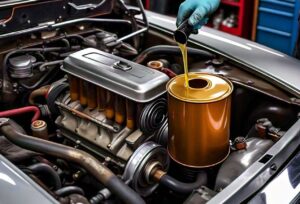
Next, change the oil and filter. Old oil can contain contaminants that might damage the engine if left in for an extended period.
Fluid Checks and Top-Ups
Fluid checks and top-ups are essential to prevent potential issues during storage. Check all essential fluids including coolant, brake fluid, and power steering fluid.
Top up any fluids that are low to ensure that your classic car’s systems remain in good working order. Inspect the radiator and hoses for any signs of leaks or wear, and replace or repair as necessary.
Ensure that the transmission fluid is at the correct level and in good condition, as this helps maintain the smooth operation of the transmission.
If you want to know more about the inspection essentials of your classic car, read this article.
Protecting Against Common Storage Hazards
When storing your classic car, protecting it from common hazards is crucial to maintaining its condition and value. This section will cover essential practices for rust prevention and treatment, battery maintenance and disconnection, tire protection, and rodent and pest prevention. Each aspect plays a vital role in preserving your vehicle during its time in storage.
Rust Prevention and Treatment
it is critical for classic car storage. Rust can cause significant damage to the exterior and undercarriage of your vehicle if not managed properly. Here’s how you can protect against rust:
- Clean Thoroughly: Before storing, wash your car to remove dirt and grime. This helps prevent rust formation.
- Apply Wax: Use a high-quality wax to create a protective layer on the paint. This shields against moisture and prevents rust.
- Use Rust Inhibitors: Apply rust inhibitors to metal parts, especially those prone to rusting. This helps in protecting the car’s undercarriage and other metal components.
- Check Regularly: Even in storage, inspect the vehicle for any signs of rust. Address any spots promptly to prevent further damage.
If you want to know more paint protection and rust removal from your classic car, read this article.
Battery Maintenance and Disconnection
Battery maintenance and disconnection are essential to prevent battery issues during long-term storage:
- Disconnect the Battery: To prevent battery drain, disconnect the battery terminals. This avoids power loss and corrosion.
- Use a Battery Tender: If you prefer not to disconnect the battery, use a battery tender to keep it charged without overcharging.
- Check Battery Condition: Before storing, ensure the battery is in good condition. Replace if necessary to avoid problems when you next use the car.
Tire Protection: Pressure, Position, and Covers
Proper tire protection ensures that your tires remain in good condition during storage:
- Inflate Tires Properly: Maintain the correct tire pressure to prevent flat spots. Over-inflate slightly if the car will be stored for an extended period.
- Use Tire Covers: Cover tires with protective covers to shield them from dust and UV rays. This helps prevent cracking and drying.
- Position the Car: If possible, move the car slightly every few months to avoid flat spots on the tires. If not, use jack stands to lift the car and relieve pressure on the tires.
Rodent and Pest Prevention
Rodent and pest prevention is vital to keep unwanted guests from damaging your classic car:
- Seal Entry Points: Ensure that the storage area is sealed and free of gaps where rodents can enter.
- Use Rodent Repellents: Place rodent repellents around the storage area. Options include traps, natural repellents, or commercial products.
- Regular Inspections: Check for signs of pest activity regularly. Address any issues immediately to prevent damage to your car.
Long-Term Storage Care Tips for Classic Cars
Maintaining the Car During Extended Storage
When storing classic cars for long periods, proper maintenance is crucial to keep them in top condition. Start by cleaning the car thoroughly. This includes washing the exterior and waxing it to protect the paint. Interior cleaning is equally important; vacuum the seats, carpets, and other surfaces to prevent dirt and grime buildup.
Fuel System Care is vital. Fill the tank to prevent condensation and add a fuel stabilizer to keep the fuel from deteriorating. For the engine, change the oil and filter before storage to remove contaminants. This will help avoid any potential damage during storage.
Battery Maintenance involves disconnecting the battery and placing it on a battery tender to keep it charged. If you prefer, you can remove the battery entirely and store it in a cool, dry place. This step helps to prevent battery corrosion and ensures the battery remains functional when you bring the car out of storage.
Tire Care includes inflating the tires to the recommended pressure and, if possible, placing the car on jack stands to prevent flat spots from forming. If jack stands aren’t an option, consider using tire covers to protect them from environmental factors.
Regular Inspections and Start-Ups
Even when your classic car is in long-term storage, regular inspections are necessary to ensure everything remains in good condition. Schedule periodic checks to examine the car for any signs of moisture, pests, or deterioration. Look under the vehicle to check for any leaks or issues that may need addressing.
Start-ups are also crucial. Every few months, start the engine and let it run for a short period. This helps to circulate the oil and keep the engine components lubricated. If you’re unable to start the car, manually turn the engine over to keep the components moving.
Fluid Levels should be checked regularly. Make sure that the coolant, brake fluid, and other essential fluids are at appropriate levels. Top them up if necessary to avoid any issues when you resume driving.
Dealing with Seasonal Changes
Seasonal changes can impact the condition of your classic car during storage. In colder climates, ensure the car is stored in a well-insulated garage to prevent freezing temperatures from affecting the fluids and mechanical parts. Use a weatherproof car cover if the vehicle is stored outdoors to protect it from snow and ice.
In warmer climates, the primary concern is excessive heat. Ensure proper ventilation in the storage area to prevent overheating. Sunlight can also damage the car’s paint and interior, so use UV-protective covers and keep the car in a shaded area.
Humidity can cause rust and mildew. Consider using a dehumidifier in the storage space or placing desiccants inside the car to absorb excess moisture.
Monitoring and Adjusting Storage Conditions
Consistent monitoring of storage conditions is key to maintaining your classic car. Regularly check the temperature and humidity levels in the storage area to ensure they are within the recommended range for classic car storage. Adjust these conditions as needed using climate control systems or dehumidifiers.
Inspect the car cover and storage space periodically for any signs of wear or damage. Replace any covers or equipment that show signs of deterioration to ensure continuous protection for your vehicle.
Additionally, ensure that the storage area is clean and free from pests. Regularly check for any signs of rodents or insects that could potentially damage the car.
Conclusion
In summary, classic car storage care is essential for maintaining the beauty and value of your vintage vehicle. Proper storage care ensures that your antique car preservation efforts are effective, whether you’re preparing for long-term storage for classic cars or just storing classic cars for a short period.
To recap, choosing the right environment for your classic car storage is crucial. A climate-controlled setting helps prevent rust and damage, while protecting your vintage vehicle from environmental factors is key. Preparing your car with thorough cleaning, addressing mechanical needs, and employing rust prevention techniques will safeguard it during storage.
Regular inspections, battery maintenance, and tire protection are important aspects of maintaining your car while it’s in storage. By following these guidelines, you ensure that your classic car remains in excellent condition, ready for you to enjoy when you bring it back out of storage.
Ultimately, effective vintage vehicle storage practices contribute to the longevity and preservation of your cherished classic car. Implement these strategies to keep your vehicle in prime condition and protect your investment for years to come.