

Keeping your pool clean is more than just a matter of aesthetics; it’s essential for your health and the longevity of your pool. If not cleaned regularly and properly, your pool can become a breeding ground for bacteria and algae, leading to cloudy water, unpleasant odors, and even potential health risks for swimmers. Plus, neglecting regular maintenance can result in costly repairs and a lot of extra work down the line.
In this ultimate guide to pool cleaning, we’ll walk you through everything you need to know to keep your pool in pristine condition. From basic tasks like skimming and vacuuming to more comprehensive upkeep and management techniques, we’ve got you covered. You’ll learn the best pool cleaning methods, how to manage your pool efficiently, and tips for maintaining all your pool equipment.
By following our step-by-step guide, you’ll ensure that your pool stays clean, safe, and inviting for everyone. So, let’s dive in and discover the secrets to effective pool cleaning and maintenance.
Understanding Pool Cleaning
Regular pool cleaning is essential for maintaining a safe, healthy, and enjoyable swimming environment. When pools are neglected, they can quickly become breeding grounds for bacteria, algae, and other harmful organisms. Additionally, improper or infrequent cleaning can lead to equipment malfunctions and costly repairs.
Why Pool Cleaning Matters
Health and Safety Concerns
A clean pool isn’t just about aesthetics; it’s crucial for health and safety. Dirty pools can harbor bacteria like E. coli and other pathogens that can cause illnesses. Algae growth, which flourishes in unclean pools, can make surfaces slippery and dangerous, leading to potential injuries.

Prolonging Pool Equipment Life
Regular cleaning helps extend the life of your pool equipment. Filters, pumps, and heaters can become clogged with debris and algae, causing them to work harder and wear out faster. Keeping your pool clean ensures these components operate efficiently and last longer, saving you money in the long run.
Improving Pool Aesthetics
No one wants to swim in a murky pool. Clear, sparkling water is inviting and enjoyable. Regular cleaning prevents unsightly stains and discoloration, keeping your pool looking its best.
Common Issues with Dirty Pools
Bacteria and Pathogens
When a pool is not cleaned regularly, it becomes a hotbed for bacteria and pathogens. These microorganisms thrive in dirty water and can cause a range of health problems, from minor skin infections to serious gastrointestinal illnesses. Regularly skimming, vacuuming, and treating the water with appropriate chemicals is essential to keep these harmful agents at bay.
Algae Growth
Algae can bloom rapidly in neglected pools, turning your clear blue water green, yellow, or even black. This not only looks unappealing but also poses safety hazards. Algae make pool surfaces slippery and dangerous, increasing the risk of falls and injuries. Moreover, once algae take hold, it can be challenging to eradicate without significant effort and expense.

Clogged Filters and Pumps
Debris like leaves, insects, and dirt can quickly clog your pool’s filtration system if not regularly cleaned. Clogged filters and pumps must work harder to circulate and clean the water, leading to increased wear and tear and potentially costly repairs or replacements. Regular maintenance of these systems is crucial to keep them functioning optimally.
Chemical Imbalance
Neglecting regular pool cleaning and maintenance can lead to a chemical imbalance in the water. Imbalanced water chemistry can cause skin and eye irritation for swimmers and can also damage the pool’s surfaces and equipment. Regular testing and adjustment of chemical levels are vital to maintaining a safe and pleasant swimming environment.
if you want to know more about chemical balancing of your pool, you can read this article.
Pool Cleaning Guide
Keeping your pool clean is essential not just for aesthetic reasons but also for health and safety. A well-maintained pool ensures a pleasant swimming experience and prolongs the life of your pool equipment. Let’s dive into the essentials of pool cleaning and how to do it right.
Why Regular Pool Cleaning Matters
Neglecting pool cleaning can lead to several issues:
- Health Risks: Dirty pools can harbor bacteria, algae, and other harmful microorganisms, posing health risks to swimmers.
- Equipment Damage: Debris and contaminants can clog filters and damage pool equipment, leading to costly repairs.
- Unpleasant Swimming Experience: A dirty pool is uninviting and can deter people from using it.

Daily Pool Cleaning Tasks
Skimming: Use a pool skimmer to remove floating debris like leaves, insects, and other particles. This should be done daily to prevent the debris from sinking and becoming more challenging to remove.
Emptying Baskets: Clear out skimmer baskets and pump strainer baskets to ensure proper water flow and filtration.

Weekly Pool Cleaning Tasks
Brushing: Brush the pool walls and floor to prevent algae buildup and remove dirt that the skimmer might miss. Use a pool brush appropriate for your pool surface (nylon for vinyl or fiberglass, steel for concrete).
Vacuuming: Manually vacuum the pool or use an automatic pool cleaner. This helps remove debris and dirt that has settled on the pool floor.

Monthly Pool Cleaning Tasks
Filter Cleaning: Depending on your filter type (sand, cartridge, or DE), clean or backwash the filter to maintain its efficiency. A clean filter ensures that your pool water stays clear and contaminant-free.
Chemical Balance Check: Test the pool water for proper pH, chlorine levels, and alkalinity. Adjust the chemicals as necessary to maintain a balanced and safe swimming environment.
Seasonal Pool Cleaning Tasks
Deep Cleaning: At the beginning and end of each swimming season, perform a deep clean. This includes draining the pool if necessary, scrubbing the pool walls and floor thoroughly, and cleaning all pool equipment.
Inspection and Repairs: Inspect the pool for any damage or wear and tear. Fix any issues before they become bigger problems, such as cracks in the pool surface or malfunctioning equipment.

Key Tips for Effective Pool Cleaning
- Consistency is Key: Regular cleaning prevents the buildup of debris and contaminants, making each cleaning session easier and less time-consuming.
- Proper Equipment: Invest in quality cleaning tools like skimmers, brushes, and vacuums to make the job more efficient.
- Stay Safe: When handling pool chemicals, always follow safety guidelines and use protective gear to avoid accidents.
Regular pool cleaning ensures that your pool remains a safe, inviting, and enjoyable place for everyone. In the next section, we’ll explore skimming and surface cleaning techniques in more detail, providing you with tips to keep your pool’s surface spotless and clear.
Skimming and Surface Cleaning
Keeping the surface of your pool clean is one of the most important steps in pool upkeep. Regular skimming and surface cleaning not only make your pool look inviting but also prevent more serious issues from developing.
Why Skimming and Surface Cleaning Matters
Imagine diving into your pool and being greeted by floating leaves, insects, and debris. Not only is this unappealing, but it can also lead to clogged filters, algae growth, and poor water quality. Regular skimming helps to remove this debris before it sinks to the bottom and becomes harder to clean.
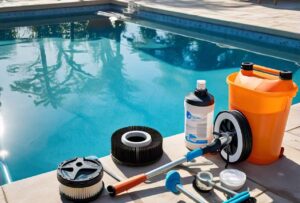
Tools for Skimming
To keep your pool surface clean, you’ll need a few essential tools:
- Pool Skimmer: A long-handled net designed to scoop debris from the water’s surface.
- Pool Brush: Used to scrub the sides of the pool and remove any dirt or algae clinging to the walls.
- Telescopic Pole: Adjustable pole that can be attached to skimmers, brushes, and other cleaning tools for better reach.
Steps for Effective Skimming
Daily Skimming: Make it a habit to skim your pool every day. This quick task helps to remove any debris that has fallen into the pool overnight or throughout the day.
Start with the Skimmer Basket: Empty the skimmer basket daily. This basket collects larger debris and prevents it from clogging the filtration system.
Skim the Surface: Use your pool skimmer to scoop out leaves, insects, and other floating debris. Move systematically around the pool to ensure you cover all areas.
Brush the Sides: After skimming, use the pool brush to scrub the sides and steps of your pool. This helps to dislodge any algae or dirt that has started to build up.
The Consequences of Neglect
Neglecting regular skimming and surface cleaning can lead to several problems:
- Clogged Filters: When debris isn’t removed, it eventually sinks and gets sucked into the pool’s filtration system, causing clogs and reducing efficiency.
- Algae Growth: Leaves and organic matter decompose in the water, providing nutrients for algae to grow. This can quickly turn your pool green and murky.
- Poor Water Quality: Debris affects the chemical balance of your pool, making it harder to maintain safe and clean water.
Tips for Maintaining a Clean Surface
Use a Pool Cover: When your pool is not in use, keep it covered to prevent debris from falling in. This can significantly reduce the amount of skimming you need to do.
Install a Leaf Trap: Consider installing a leaf trap in your skimmer line to catch larger debris before it reaches the filter.
Check After Storms: After windy weather or storms, be extra diligent with skimming, as more debris is likely to have fallen into the pool.
Deep Cleaning Methods
When it comes to maintaining a pristine pool, surface cleaning alone won’t cut it. Deep cleaning ensures that every part of your pool is clean and safe for use. Neglecting deep cleaning can lead to serious issues like algae buildup, cloudy water, and even damage to your pool’s surfaces and equipment. Here, we’ll cover essential deep cleaning methods, including brushing and vacuuming, to keep your pool sparkling clean.
Brushing the Pool
Brushing the pool walls and floor is crucial for preventing algae and grime buildup. Even if your pool looks clean, microscopic algae spores can attach to the surfaces and multiply rapidly. Here’s how to do it right:
- Choose the Right Brush: For concrete or plaster pools, use a brush with stainless steel bristles. For vinyl, fiberglass, or painted pools, opt for a brush with nylon bristles to avoid scratching the surface.
- Brush Regularly: Aim to brush your pool at least once a week. Focus on areas with poor circulation, such as steps, ladders, and corners, where algae is more likely to grow.
- Proper Technique: Start at the top of the walls and work your way down to the floor. Use long, smooth strokes to ensure you cover all areas effectively. Don’t forget to brush around the skimmer and behind any pool accessories.

Vacuuming the Pool
Vacuuming removes dirt and debris that has settled on the pool floor. There are two main types of vacuums: manual and automatic. Here’s a detailed guide on how to use each type.
Manual Vacuuming
Assemble Your Equipment: Connect the vacuum head to the telescopic pole and attach the vacuum hose to the vacuum head.
Prime the Hose: Submerge the vacuum head and hose in the pool, ensuring no air is trapped. Connect the other end of the hose to the skimmer or vacuum port.
Vacuum the Pool: Move the vacuum head slowly across the pool floor in overlapping rows. Take your time to ensure you pick up all debris. Avoid stirring up debris as this makes it harder to clean.
Automatic Vacuuming
Choose the Right Vacuum: There are three types of automatic vacuums: suction-side, pressure-side, and robotic. Suction-side vacuums attach to the skimmer, pressure-side vacuums connect to the return jet, and robotic vacuums operate independently.
Set Up the Vacuum: Follow the manufacturer’s instructions for setting up your specific model. Make sure it’s properly connected and ready to go.
Let it Run: Turn on the vacuum and let it do the work. Depending on the model, it can take a few hours to clean the entire pool. Check periodically to ensure it’s functioning correctly.

Handling Tough Stains
Sometimes, regular brushing and vacuuming aren’t enough to tackle tough stains. Here’s how to address them:
- Identify the Stain: Common stains include rust, organic matter, and scale. Determine the type of stain to choose the appropriate treatment.
- Use Stain-Specific Treatments:
- Rust Stains: Apply a small amount of ascorbic acid (vitamin C) directly to the stain. Let it sit for a few minutes, then brush and vacuum the area.
- Organic Stains: Apply a pool shock treatment to oxidize the organic matter. Follow up with brushing and vacuuming.
- Scale Deposits: Use a pumice stone for concrete pools or a specialized scale remover for all pool types. Gently scrub the affected area.
- Prevent Future Stains: Maintain proper water chemistry and clean your pool regularly to prevent stains from reoccurring.
Algae Buildup
Algae can quickly turn a clear pool into a green mess. Here’s how to tackle and prevent it:
- Shock the Pool: Apply a high dose of chlorine (shock) to kill the algae. Follow the manufacturer’s instructions for the correct amount based on your pool size.
- Brush and Vacuum: After shocking, thoroughly brush and vacuum the pool to remove dead algae.
- Maintain Proper Chemistry: Keep your pool’s pH, chlorine, and alkalinity levels balanced to prevent algae growth. Regularly test and adjust your water chemistry.

Pool Upkeep and Maintenance
Keeping up with your pool’s upkeep and maintenance is key to ensuring it remains a safe and enjoyable place to swim. Neglecting regular maintenance can lead to various issues, from cloudy water and algae growth to more severe problems like damaged equipment or structural issues. Let’s dive into some essential maintenance tasks to keep your pool in top shape.
Routine Maintenance Tasks
Regular upkeep is crucial for preventing problems before they start. Here are some essential routine tasks you should incorporate into your pool maintenance schedule:
1. Check and Maintain Water Levels
Ensure your pool’s water level is consistent. Low water levels can damage the pump, while high levels can reduce the effectiveness of skimming.
Adjust the water level as needed, especially after heavy rainfall or frequent usage.
2. Inspect and Clean Filters
Pool filters play a vital role in keeping the water clean by trapping debris and impurities. Depending on your filter type (sand, cartridge, or DE), follow the manufacturer’s instructions for cleaning and replacing them.
Regularly backwash sand and DE filters to keep them functioning efficiently.
3. Monitor Water Chemistry
Proper water chemistry is essential for a clean and safe pool. Test the water weekly for pH, chlorine levels, alkalinity, and calcium hardness.
Adjust chemical levels as needed to maintain balance. Improper chemical balance can lead to skin irritation, equipment damage, and algae growth.
4. Skim and Vacuum Regularly
Use a pool skimmer to remove leaves, bugs, and other debris from the water’s surface daily.
Vacuum the pool floor at least once a week to remove dirt and debris that has settled at the bottom.
Seasonal Maintenance Tasks
Seasonal changes bring different challenges to pool upkeep. Here’s how to address them:
1. Spring Opening
Clean and inspect the pool thoroughly after winter. Remove the cover, skim off debris, and vacuum.
Test and balance the water chemistry before opening for the season.
Inspect and service all equipment, including the pump, filter, and heater.
2. Summer Maintenance
With increased use, pay extra attention to skimming, vacuuming, and chemical balancing.
Check and adjust water levels frequently.
Clean the pool’s tiles and waterline to prevent calcium buildup.
3. Fall Closing
Before closing the pool for winter, give it a thorough cleaning. Skim, vacuum, and balance the water chemistry.
Lower the water level and add winterizing chemicals.
Cover the pool securely to protect it from debris and freezing temperatures.
Addressing Common Issues
Regular upkeep helps prevent many common pool problems. Here’s how to address a few if they do occur:
1. Cloudy Water
Causes: Poor filtration, incorrect water chemistry, or insufficient chlorine levels.
Solution: Clean or replace the filter, shock the pool with chlorine, and balance the water chemistry.
2. Algae Growth
Causes: Low chlorine levels, poor water circulation, or improper pH balance.
Solution: Brush and vacuum the pool, shock with algaecide, and adjust chemical levels.
3. Stains and Scaling
Causes: High mineral content in water, imbalanced pH, or metal objects left in the pool.
Solution: Use a pool stain remover or a pumice stone for stubborn stains. Adjust pH and calcium hardness to prevent scaling.

By following these upkeep and maintenance tips, you can ensure your pool remains clean, safe, and enjoyable throughout the year. Regular attention to these tasks will help you avoid costly repairs and keep your pool in pristine condition.
Meanwhile, if you want to know more about the needed maintenance for your pool’s pump, you can read this article.
Effective Pool Management
Proper pool management is crucial for maintaining a clean, safe, and enjoyable swimming environment. Without regular cleaning and upkeep, a pool can quickly become a breeding ground for bacteria, algae, and other contaminants. Here, we’ll address common issues that arise from poor maintenance and provide tips for effective pool management.
Managing Pool Water Chemistry
One of the most important aspects of pool management is maintaining the correct water chemistry. Balanced water prevents algae growth, protects pool equipment, and ensures a pleasant swimming experience.
- Testing the Water: Regularly test your pool’s pH, chlorine levels, alkalinity, and calcium hardness. Use a reliable test kit or take samples to a local pool store for analysis.
- Adjusting pH Levels: Keep the pH between 7.2 and 7.6. Low pH can cause corrosion, while high pH can lead to scale buildup. Use pH increaser or decreaser as needed.
- Chlorine Management: Maintain chlorine levels between 1.0 and 3.0 ppm. Chlorine kills harmful bacteria and keeps the water clear. Use chlorine tablets, liquid chlorine, or a saltwater chlorinator.
- Alkalinity and Calcium Hardness: Ensure alkalinity is between 80 and 120 ppm to stabilize pH. Calcium hardness should be between 200 and 400 ppm to prevent corrosion and scaling.

Maintaining Pool Equipment
Well-maintained equipment is essential for efficient pool operation. Regularly inspect and clean your pool’s equipment to prevent malfunctions and prolong their lifespan.
- Pump and Filter Maintenance: Clean or replace the filter regularly to ensure efficient filtration. Check the pump for any signs of wear and tear, and ensure it is running smoothly.
- Skimmer and Pump Baskets: Empty the skimmer and pump baskets frequently to remove debris that could clog the system and reduce circulation.
- Automatic Cleaners: If you use an automatic pool cleaner, inspect it for any issues and clean it as needed to ensure optimal performance.
Addressing Common Pool Problems
Ignoring regular pool maintenance can lead to several common issues that can be costly and time-consuming to fix.
- Algae Growth: Without proper chemical balance and regular cleaning, algae can quickly take over your pool, turning it green and slimy. Prevent this by maintaining correct chlorine levels and brushing the pool surfaces.
- Cloudy Water: Poor filtration, high pH, or imbalanced chemicals can cause cloudy water. Regularly backwash the filter, adjust the chemicals, and ensure proper circulation.
- Stains and Scaling: Metals and minerals in the water can cause stains and scaling on pool surfaces. Use a sequestering agent to bind metals and maintain proper water balance to prevent these issues.
Seasonal Pool Management
Different seasons require different approaches to pool management to keep your pool in top condition year-round.
- Spring Opening: Remove the pool cover, clean the pool thoroughly, and balance the chemicals. Inspect all equipment and start up the filtration system.
- Summer Upkeep: Increase cleaning frequency, monitor chemical levels closely, and ensure the pump and filter are running efficiently to handle the higher usage.
- Fall Closing: Clean the pool, balance the chemicals, and winterize the equipment. Cover the pool to protect it from debris and harsh weather conditions.
- Winter Maintenance: Periodically check the cover and remove any accumulated debris or water. Ensure the pool is properly winterized to prevent damage from freezing temperatures.
By following these pool management tips, you can avoid common problems and enjoy a clean, safe, and inviting pool all year long. Proper pool upkeep not only extends the life of your pool and equipment but also ensures a healthier swimming environment for everyone.
Related Questions
Regular pool cleaning prevents the buildup of debris, algae, and bacteria, ensuring a clean and safe swimming environment. It also helps maintain the pool’s aesthetic appeal and prolongs the life of the pool and its equipment.
Essential tools include a skimmer net, pool brush, vacuum, test kit, and chemical treatments. Automatic cleaners and robotic vacuums can also make the job easier.
Skim the pool daily to remove leaves, insects, and other debris from the surface. This prevents debris from sinking to the bottom and becoming more difficult to remove.
Attach the vacuum head to the telescoping pole and hose. Submerge the vacuum head and hose to remove air. Connect the hose to the skimmer or dedicated vacuum line, and slowly move the vacuum head across the pool floor, overlapping each pass to ensure thorough cleaning.
Maintain proper chemical balance, especially chlorine levels, and brush the pool surfaces regularly. Ensure good water circulation and filtration, and consider using algaecide as a preventive measure.
Backwashing is the process of cleaning the pool filter by reversing the water flow to flush out trapped debris. Perform backwashing when the filter’s pressure gauge indicates a 7-10 psi increase over the normal operating level.
Regularly test the water and adjust pH, chlorine, alkalinity, and calcium hardness levels as needed. Follow the manufacturer’s guidelines for adding chemicals and retest the water after making adjustments.
Signs include reduced water flow, unusual noises, increased energy consumption, and visible wear or damage. Regularly inspect and clean equipment to prevent these issues. You can either call Fortgard or your very own service company to discuss the matter.
Use a sequestering agent to prevent metal and mineral buildup. For existing stains, use a stain remover specific to the type of stain. Regularly brush and clean the pool surfaces to prevent scaling.
In spring, remove the cover, clean the pool, balance the chemicals, and inspect the equipment. For summer, increase cleaning frequency and monitor chemical levels closely. In fall, clean the pool and winterize the equipment. In winter, periodically check the cover and remove any debris.
Fortgard’s software provides reminders for regular cleaning tasks, tracks chemical levels, and schedules maintenance activities. It helps pool owners stay on top of their pool upkeep with automated alerts and detailed maintenance logs.
Fortgard includes features for scheduling and logging cleaning activities such as skimming, vacuuming, and brushing. Users can track the effectiveness of their cleaning routines and ensure no tasks are overlooked.
Fortgard’s software is designed with an intuitive interface, making it easy for pool owners of all experience levels to use. The system offers clear instructions, automated reminders, and comprehensive support resources.
Fortgard provides extensive customer support, including online resources, tutorials, and a dedicated support team available to assist with any issues or questions users may have.
Visit our website to learn more about the features and benefits of the software. Sign up for a free trial or contact the sales team for a personalized demonstration and pricing information.


9 Responses
Awesome article.
Wow that was odd. I just wrote an incredibly long comment but after
I clicked submit my comment didn’t appear.
Grrrr… well I’m not writing all that over again. Anyways, just wanted to say fantastic blog!
Wow that was odd. I just wrote an incredibly long comment
but after I clicked submit my comment didn’t appear.
Grrrr… well I’m not writing all that over again. Anyways, just wanted to say fantastic blog!
Enjoying your contents, will check it more often!
Your style is unique compared to ther folks I have read stuff from.
Great Content. Thanks.
I’ve been exploring for a bit for any high-quality articles or
blog posts in this kind of house . Exploring in Yahoo I at last stumbled upon this website.
Reading this info So I’m happy to express that I have an incredibly
good uncanny feeling I came upon just what I needed.
Thanks for the great content.
Your posts are so fun and helpful.